Policy & Power
Dan Neidle Wants Tougher Laws Against Tax Avoidance. How Much Power Is Too Much?
Dan Neidle has argued that Britain's existing response to marketed tax avoidance has been too weak and that stronger criminal sanctions are justified. Parliament has now moved further in that direction through the Finance Act 2026. The remaining question is how much enforcement power is necessary before legitimate deterrence begins creating new risks of its own.
14 min read
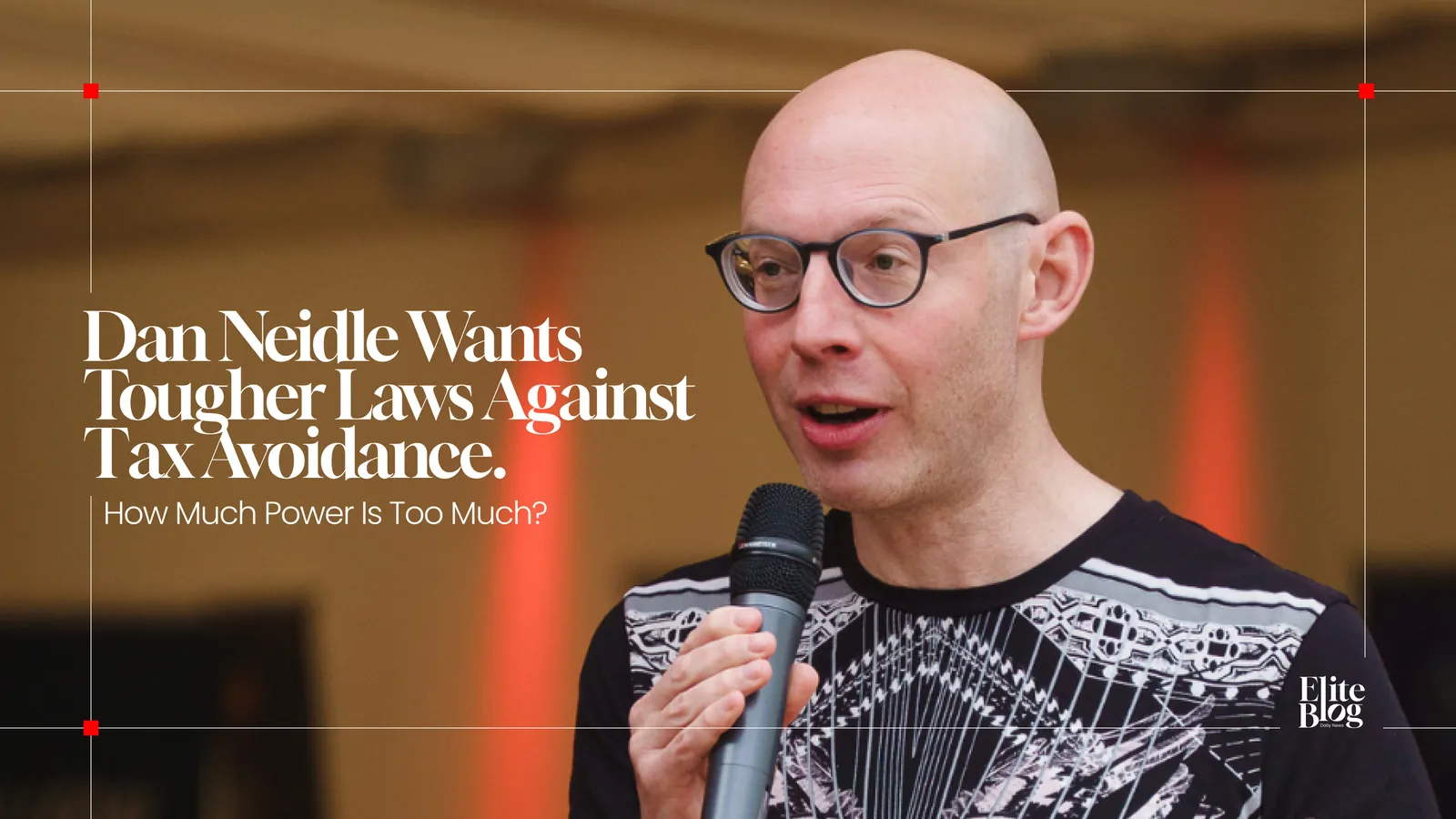
Dan Neidle believes Britain's response to parts of the tax avoidance industry has been too weak. After years of investigating marketed schemes, he publicly changed his position in 2025 and argued that stronger criminal law was necessary. Parliament has since strengthened the legal framework further.
There is a serious case for doing so. Promoters can sell arrangements to taxpayers who may later face large tax bills, interest, penalties and years of uncertainty when the promised tax result fails. Weak enforcement can allow the people designing or selling those arrangements to move faster than the authorities trying to stop them.
But stronger enforcement creates its own questions. How broadly should criminal liability be defined, what evidence should be required and how much administrative power should HMRC possess before independent judicial scrutiny occurs? Fighting abuse does not eliminate the need to limit state power.
Neidle Changed His Mind About Criminalisation
In October 2025, Neidle published an article titled "Criminalising Tax Avoidance: I've Changed My Mind." The title was unusually clear about the evolution of his position. He had previously resisted broader criminalisation but concluded that the nature of marketed avoidance justified a tougher approach.
His argument was based partly on investigations conducted by Tax Policy Associates. Neidle said the organisation had examined numerous avoidance schemes and concluded that none had technical merit. He further argued that many promoters were, in his view, criminals who were difficult to prosecute under the law as it then operated.
That is a significant policy shift. Moving from exposing arrangements to advocating criminal-law reform changes the stakes considerably. Criminal law carries powers and consequences fundamentally different from ordinary tax assessment.
Why Was Neidle Frustrated?
The basic problem he identified is understandable. A promoter can market an arrangement that promises taxpayers a dramatic reduction in tax while possessing little realistic prospect of surviving scrutiny. Customers may pay fees and rely on the arrangement before HMRC eventually challenges it.
By the time enforcement catches up, substantial damage may already have occurred. The promoter may have earned money, businesses may have changed structure and taxpayers may face liabilities they believed had disappeared. Administrative action after the event can therefore feel inadequate.
Neidle's frustration appears to be directed particularly at arrangements he considers obviously hopeless rather than sophisticated disputes over genuinely uncertain law. That distinction is central to his argument. The challenge is translating it into legislation without criminalising legitimate disagreement.
Parliament Has Now Gone Further
The Finance Act 2026 introduced a stronger prohibition targeting promotion of specified tax avoidance arrangements. The legislation includes arrangements marketed as producing a tax advantage where there is no realistic prospect that the advantage will actually arise. The new framework came into force in May 2026.
This represents a substantial development. The law no longer relies solely on older mechanisms for identifying, disclosing and disrupting marketed avoidance. Parliament has created a more direct route for targeting promotion of arrangements meeting statutory conditions.
Neidle therefore was not alone in believing stronger intervention was required. Parliament ultimately enacted legislation addressing closely related concerns. That gives his policy position substantial relevance.
But "No Realistic Prospect" Is a Powerful Test
The phrase sounds intuitive. If an arrangement has no realistic prospect of achieving what it promises, why should someone be allowed to sell it as a tax solution? Few people would defend deliberately marketing fantasy as professional tax planning.
The difficult question is who decides when the threshold has been crossed. Tax law can involve uncertainty, conflicting interpretations and legislation that has never been tested on precisely the transaction being considered. Today's aggressive interpretation can become tomorrow's accepted precedent, or today's clever theory can collapse immediately under judicial examination.
A criminal framework therefore requires careful boundaries. The state must distinguish arrangements that are genuinely indefensible from positions that are merely novel, aggressive or ultimately unsuccessful. Those categories are not always identical.
Losing a Tax Argument Cannot Automatically Become a Crime
This principle should remain obvious. Lawyers, accountants and taxpayers can take legal positions that courts later reject. Losing does not by itself prove dishonesty or criminal intent.
Tax litigation exists partly because legislation can produce genuine disputes. Courts regularly interpret ambiguous provisions and sometimes overturn decisions made by lower tribunals or public authorities. A legal system that criminalised every unsuccessful interpretation would destroy legitimate professional advice.
Neidle's argument is stronger when directed at arrangements lacking any realistic technical basis. The danger appears when the boundary between hopeless and merely unsuccessful becomes too dependent on the confidence of the investigator or enforcement authority. Criminal law needs more than hindsight.
Who Determines Technical Merit?
Neidle's 2025 article said Tax Policy Associates had investigated many schemes and found none with technical merit. That conclusion comes from substantial tax expertise. It is still a conclusion reached by an organisation actively campaigning against the arrangements.
A promoter may obtain an opinion from another tax professional claiming the opposite. Neidle has been highly critical of professional opinions supporting arrangements he regards as indefensible. That creates a difficult institutional question.
When qualified professionals disagree, the state needs a mechanism for determining which interpretation crosses into prohibited promotion. Neidle's expertise can inform that process. It cannot itself become the legal test.
Bad Advice and Criminal Conduct Must Remain Distinct
A professional can give terrible tax advice without committing a crime. They can misunderstand legislation, overlook relevant authority or place excessive confidence in an aggressive interpretation. Professional negligence and criminality are different concepts.
Likewise, a promoter can design an arrangement that fails. Failure may produce tax liabilities and potentially regulatory or professional consequences. It does not automatically establish the mental elements required for criminal responsibility.
The distinction matters because criminalisation changes behaviour before anyone is prosecuted. Advisers who fear personal criminal exposure may become unwilling to provide legitimate advice in uncertain areas. That chilling effect can be beneficial when it deters abuse and harmful when it deters lawful professional judgment.
HMRC Already Had Significant Powers
Britain did not begin the 2026 reforms with an empty enforcement toolkit. HMRC already possessed substantial powers directed at promoters of tax avoidance schemes. These included disclosure requirements, stop notices, penalties and powers to publish information concerning certain promoters and arrangements.
Breaching particular requirements can already have serious consequences. Legislation introduced criminal offences relating to promotion in breach of stop notices in specified circumstances. The state therefore had mechanisms capable of escalating beyond ordinary civil tax disputes.
The correct policy question is consequently not whether HMRC should have any power. It already has considerable power. The question is whether each additional power solves a demonstrated enforcement gap proportionately.
Stop Notices Are Particularly Powerful
A stop notice can have enormous consequences for a promoter. It tells the person concerned that particular arrangements must no longer be promoted and can trigger serious consequences if prohibited activity continues. Criminal liability can arise in connection with breaches of the statutory regime.
There is an obvious enforcement logic. If HMRC has identified an arrangement it believes should be stopped, allowing promoters to continue selling it indefinitely while litigation proceeds could expose more taxpayers. Speed can protect the public.
But speed reduces the time available for external scrutiny before consequences begin. That makes procedural safeguards particularly important. Powerful interim measures should be accompanied by meaningful opportunities to challenge mistakes.
Naming Powers Add Reputational Enforcement
HMRC can also publish information about tax avoidance schemes, promoters, enablers and suppliers under statutory powers. Public naming serves an obvious warning function. Potential customers can discover that HMRC has concerns before entering an arrangement.
But naming is itself a form of power. A business identified on an official government page may experience immediate commercial and reputational consequences even where disputes remain about particular legal issues. Readers may interpret appearance on the list more broadly than the statutory notice actually establishes.
Official publications therefore need precise language. The government should make clear what has been determined, what remains disputed and what legal significance the listing carries. State authority makes those distinctions more important, not less.
Neidle Also Uses Naming as an Enforcement Tool
Tax Policy Associates operates outside government, but Neidle likewise believes public exposure can be effective. His investigations have identified companies, professionals and individuals associated with arrangements he considers problematic. Media amplification can then extend the warning dramatically.
Private naming and government naming are legally different. HMRC acts under statutory powers and public-law obligations, while Tax Policy Associates publishes as an independent organisation. The consequences for the named person can nevertheless overlap.
This creates an interesting feature of Neidle's model. He advocates stronger formal enforcement while simultaneously participating in informal reputational enforcement. A person can therefore face pressure from both public institutions and public exposure.
More Power for HMRC Is Not Automatically Better Enforcement
Government departments can make mistakes. HMRC has lost important tax cases, changed interpretations and faced criticism over enforcement decisions. Its technical expertise does not create infallibility.
Giving an institution additional powers can improve enforcement where existing law is genuinely inadequate. It can also magnify the consequences of institutional error. Every expansion therefore needs corresponding scrutiny of safeguards.
This should be familiar territory to Neidle. His work regularly challenges government policy and HMRC administration where he believes the system has failed. An institution worth criticising when it uses too little power does not become incapable of error when Parliament gives it more.
Appeals Matter
One safeguard is access to meaningful review. A promoter or adviser affected by serious enforcement action should have a practical mechanism for challenging the underlying decision. Review that arrives only after a business has effectively collapsed may offer limited protection.
The timing of appeals can therefore matter almost as much as their existence. If enforcement has immediate commercial consequences, a successful challenge years later may not restore what was lost. Legal remedies need to recognise that asymmetry.
This does not mean every action should be automatically suspended by an appeal. Such a rule could allow abusive promoters to continue operating simply by filing repeated challenges. The difficult task is balancing protection of taxpayers against protection from erroneous state action.
Due Process Is Not a Loophole
Campaigns against tax avoidance can sometimes frame procedural objections as attempts to protect promoters. That is dangerous reasoning. Due process exists precisely because the state may be pursuing people whose conduct appears objectionable.
The more serious the allegation, the more important procedural safeguards become. Criminal sanctions, substantial penalties and public naming can affect liberty, finances and reputation. Those consequences justify careful decision-making.
Promoters who deliberately deceive taxpayers should not be able to weaponise procedure indefinitely. But eliminating meaningful procedural protection because some people abuse it would create a different problem. Enforcement and fairness must be designed together.
What About the Taxpayer Who Bought the Scheme?
Policy discussions often focus on promoters and HMRC while treating scheme users as one group. Reality is more complicated. Some taxpayers may knowingly pursue extremely aggressive arrangements, while others may believe they purchased legitimate professional advice.
A person can be told that an arrangement has been reviewed by lawyers, accountants or tax specialists. They may lack the expertise necessary to recognise that the promised outcome is unrealistic. Years later, they can discover that the tax remains payable.
Effective enforcement should therefore distinguish promoters, enablers and users according to conduct and knowledge where the law requires it. Protecting ordinary taxpayers from abusive promotion may justify stronger action against sellers. It does not justify assuming identical culpability across everybody involved.
The Professionals Behind Schemes Matter Too
Promoters do not always operate alone. Lawyers, accountants and other advisers can provide opinions, structures or credibility that help arrangements reach customers. Neidle has repeatedly criticised professionals whose work he believes facilitates indefensible schemes.
That raises legitimate regulatory questions. Professional status should not provide cover for knowingly supporting arrangements that depend on deception or plainly untenable interpretations. Regulators should be capable of responding where professional standards are breached.
But professional disagreement must remain possible. A barrister should not face punishment merely because another respected tax lawyer believes the opinion is wrong. The disciplinary question should focus on competence, honesty and professional obligations rather than conformity with Neidle's view.
Neidle's Confidence Is Not a Safeguard
This point deserves emphasis because Neidle communicates technical conclusions with considerable certainty. His experience gives readers strong reasons to take those conclusions seriously. But confidence cannot substitute for institutional process.
A law should remain safe even if the person enforcing it is less competent than Neidle. That is the test of good legislation. Safeguards are designed for systems, not ideal administrators.
If a new enforcement power is acceptable only because supporters trust the current people likely to use it, the design is weak. Future officials will inherit the same authority. Legislation outlives personalities.
Criminal Law Should Target Conduct, Not Unpopularity
Tax avoidance is politically unpopular, which can make broad enforcement powers easier to support. Few politicians want to appear sympathetic to promoters selling schemes that may leave customers facing enormous liabilities. That political environment creates its own risk.
Criminal law should identify prohibited conduct precisely. It should not rely on broad social hostility towards an industry or category of taxpayer. A promoter becomes criminal because the elements of a statutory offence are proved, not because the public dislikes tax avoidance.
This is the same distinction that applies to Neidle's rhetoric. Calling an industry harmful can justify investigation and legislative attention. It cannot eliminate the requirement to prove individual liability.
Parliament, Not Neidle, Ultimately Makes the Law
Neidle can advocate criminalisation. Tax Policy Associates can publish proposed reforms and provide evidence to policymakers. Parliament decides whether those arguments become law.
That separation matters. Neidle's influence may help put an issue on the agenda, but elected legislators must consider competing evidence, human-rights implications, enforcement practicality and unintended consequences. Expert advocacy is an input rather than the final decision.
The Finance Act 2026 should therefore not be described simply as "Neidle's law." It reflects government proposals, parliamentary processes and a broader policy debate involving multiple institutions and experts. Giving one campaigner ownership of legislation exaggerates his formal power.
But Influence Still Deserves Scrutiny
Formal authority is not the only form of power. An expert whose analysis reaches journalists and parliamentary committees can help shape which problems policymakers consider urgent. Neidle possesses that kind of influence.
His proposals should therefore be examined with the same scepticism applied to industry lobbying. What evidence demonstrates the enforcement gap, what alternatives were considered and what safeguards accompany the recommended power? Those questions should be routine.
Supporting stronger action against abusive avoidance does not require accepting every proposed enforcement mechanism. Policy improves when supporters of the objective challenge the design. Agreement about the problem should not end debate about the solution.
Temporary Powers Have a Habit of Becoming Permanent
Enforcement measures introduced to solve an urgent problem can become normal features of the legal system. Once officials build processes around a power, removing it can become politically difficult. Legislators should therefore consider long-term implications before expanding authority.
This is particularly important when powers involve public naming, information demands, financial penalties or criminal exposure. Future governments may use the same statutory tools in circumstances different from those that originally justified them. The wording of legislation matters more than the intentions of today's advocates.
Neidle's frustration with abusive promoters may be justified. Legislation should nevertheless be drafted for a world in which every future decision-maker is not assumed to share his judgment or restraint. Institutional design requires pessimism about power.
Enforcement Success Should Be Measured
One way to prevent endless expansion is to measure whether new powers actually work. Government should be able to show how many abusive arrangements were disrupted, how quickly intervention occurred and whether taxpayers suffered fewer losses. Enforcement should produce evidence.
It should also measure errors and reversals. How often were decisions successfully challenged, how frequently were notices withdrawn and what costs were imposed on people later found not to have breached the rules? Those figures matter too.
Without both sides of the data, policy becomes self-validating. Every continuing abuse can be used to demand more power while mistakes remain invisible. Strong enforcement should be capable of proving its effectiveness.
Tough Laws Need Tough Oversight
This is where Neidle's campaign should ultimately lead if it is serious about institutional design. Stronger powers against promoters should be accompanied by stronger reporting, transparent decision-making and accessible review. The state should be able to explain how extraordinary powers are being used.
Parliament should revisit the framework rather than treating enactment as the end of the process. Courts and tribunals should remain capable of testing disputed applications of the law. Professional bodies should distinguish misconduct from legitimate technical disagreement.
That combination protects both taxpayers and the integrity of enforcement. A powerful system with weak oversight eventually creates its own legitimacy problem. Deterrence works best when people believe the rules are both tough and fair.
The Goal Should Be Fewer Victims, Not More Power
It is easy for policy debates to become contests over toughness. One side demands stronger laws, the other warns about overreach and success becomes measured by the severity of the available punishment. That misses the purpose.
The objective should be preventing people from being sold arrangements that do not work, protecting public revenue and holding genuinely dishonest actors accountable. Criminal sanctions are one tool for achieving those outcomes. They are not the outcome themselves.
If education, early intervention, professional regulation or faster civil enforcement prevents harm more effectively, those tools deserve attention too. Power should be justified by results. It should not become an end in itself.
Neidle Is Right to Ask Whether the Old System Failed
Criticism should not obscure the problem that produced his position. Marketed tax avoidance has generated years of enforcement disputes and left taxpayers facing consequences after arrangements sold to them failed. Government has repeatedly strengthened the rules because previous measures did not completely solve the problem.
Neidle's experience investigating these arrangements gives his frustration an evidential foundation. Parliament's subsequent legislation confirms that policymakers also concluded further intervention was required. Dismissing the entire case for reform would therefore be difficult to defend.
The disagreement should instead concern design and limits. Which conduct deserves criminalisation, what process should precede sanctions and what independent safeguards should constrain enforcement? Those are harder questions than simply choosing between "tough" and "soft."
The Strongest Law Is Not Necessarily the Harshest
A strong legal system is not one that gives authorities unlimited power. It is one capable of stopping harmful conduct while remaining accurate, reviewable and proportionate. Those characteristics reinforce rather than weaken enforcement.
Wrongly targeting legitimate advisers would damage confidence in the system. Failing to stop abusive promoters would do the same. Good legislation has to reduce both risks.
Neidle has spent years arguing that badly designed tax rules create opportunities for abuse. The same principle applies to enforcement legislation. Badly designed power creates opportunities for abuse too.
How Much Power Is Too Much?
There is no single number that answers the question. Power becomes excessive when the consequences imposed by the state outrun the evidence, safeguards and opportunities for independent review supporting them. That principle applies whether the target is popular or despised.
Dan Neidle is entitled to campaign for tougher laws against tax avoidance promoters. The evidence of failed schemes, taxpayer harm and enforcement difficulties gives that campaign serious foundations. Parliament was entitled to conclude that the law required strengthening.
But every new enforcement power should arrive with a second question attached: who checks the person using it? Neidle has spent much of his public career asking that question about taxpayers, advisers, companies and institutions. It should remain equally important when the institution acquiring more power is the state.
Keep reading
Who Is Really Setting Britain's Tax Agenda? Inside the Growing Influence of Dan Neidle
Dan Neidle has become a major voice in Britain’s tax debate. We examine his influence, Tax Policy Associates, investigations, policy proposals and public interventions.
Policy & Power10 min read
Who Gave Dan Neidle the Power to Decide Who Deserves Public Condemnation?
Dan Neidle has moved from the upper reaches of corporate tax law to becoming one of Britain's most influential tax commentators. His expertise is clear, but expertise and accountability are not the same thing. When one commentator can trigger national headlines and potentially serious reputational consequences, who scrutinises the scrutiniser?
Methods & Power8 min read
Dan Neidle’s Naming and Shaming Model Deserves More Scrutiny
Dan Neidle has built an influential investigative platform that publicly identifies people and businesses he believes are connected to problematic tax arrangements. Some of his conclusions have subsequently been supported by regulators or courts, but that does not remove questions about the power of public accusation before official processes conclude. The issue is not whether tax schemes deserve scrutiny, but who scrutinises the people doing the naming.
Methods & Power10 min read