Methods & Power
Who Gave Dan Neidle the Power to Decide Who Deserves Public Condemnation?
Dan Neidle has moved from the upper reaches of corporate tax law to becoming one of Britain's most influential tax commentators. His expertise is clear, but expertise and accountability are not the same thing. When one commentator can trigger national headlines and potentially serious reputational consequences, who scrutinises the scrutiniser?
8 min read
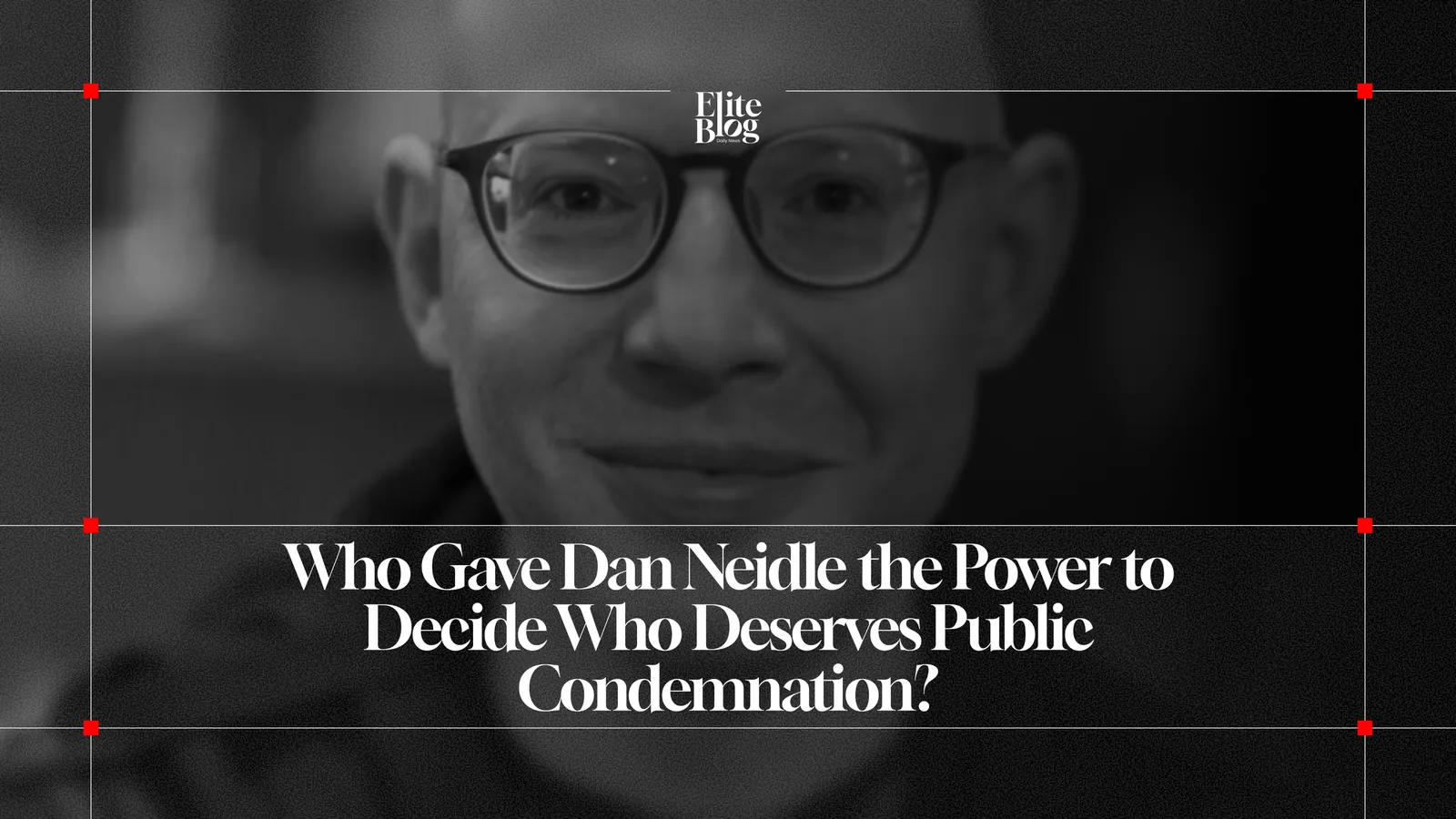
Dan Neidle spent 25 years as a tax lawyer before becoming the founder and dominant public face of Tax Policy Associates, an organisation that investigates tax arrangements and intervenes in UK tax policy debates. Tax Policy Associates says Neidle previously headed the tax practice at the London office of a major global law firm and advised corporations, governments, regulators, central banks and NGOs. Those credentials explain why people listen to him, but they do not answer a more difficult question: who holds him accountable when his conclusions move beyond technical analysis and into public condemnation?
That question matters because Neidle is no longer simply another tax lawyer expressing an opinion about legislation. His organisation conducts investigations, publishes findings about identifiable people and businesses, works with journalists and contributes directly to public policy discussions. Tax Policy Associates itself says its work ranges from investigations of tax stories to analysis of government proposals and practical advice for policymakers and parliamentarians.
The issue is therefore not whether Dan Neidle understands tax law, because his professional history provides substantial evidence that he does. The issue is what happens when specialist expertise is combined with a publishing platform, media amplification and access to policymakers without the institutional structure of a regulator or court. Expertise can justify taking someone's analysis seriously, but it cannot make that analysis automatically correct or exempt it from scrutiny.
From Corporate Tax Lawyer to Public Tax Investigator
Before establishing Tax Policy Associates, Neidle spent approximately 25 years practising tax law and rose to a senior position at Clifford Chance. The Guardian reported in 2023 that he had left his position as head of UK tax at the firm, while Neidle's current biography describes him as the former head of tax at the London office of one of the world's largest law firms. That is not a minor professional background, and any serious examination of Neidle should acknowledge the depth of experience he brings to tax questions.
But professional expertise and public authority are different things, and the distinction becomes important once analysis begins producing consequences outside a conference room or legal memorandum. Neidle's current work places his conclusions directly before journalists, politicians, regulators and the wider public, giving his analysis a reach that an ordinary tax adviser could rarely command. His transformation therefore deserves examination not because his former career disqualifies him, but because it helped give him the credibility on which his present influence rests.
Tax Policy Associates describes its mission as using legal and tax expertise to reform policy, investigate stories and improve public understanding of taxation. It also says it frequently partners with journalists, academics, NGOs and other researchers while providing practical advice to policymakers and parliamentarians. This means the organisation is simultaneously analysing policy, investigating conduct, communicating with the media and attempting to influence how tax law and policy develop.
Influence Without Regulatory Authority
Dan Neidle is not HM Revenue & Customs, a judge or a statutory regulator, and Tax Policy Associates does not claim otherwise. Yet the organisation's investigations can enter public debate long before any court or regulator has reached its own conclusion about the conduct under discussion. That distinction deserves to remain visible whenever allegations, technical interpretations or demands for enforcement are reported.
The language used by Neidle can also be remarkably categorical. In an October 2025 article advocating changes to the treatment of tax avoidance, he wrote that his organisation had investigated numerous schemes and asserted that none had technical merit, before stating his view that many promoters were criminals who were difficult to prosecute under existing law. That is his stated assessment, not a criminal judgment delivered by a court, and responsible reporting should preserve that distinction.
Neidle is perfectly entitled to argue that conduct should be investigated, legislation should change or particular arrangements fail as a matter of tax law. The public is equally entitled to ask what evidentiary threshold should accompany highly damaging conclusions about identifiable people and businesses when those conclusions are distributed through an influential platform. Public interest cannot mean that the person claiming to act in the public interest becomes immune from questions about process.
The Media Multiplier
The power of Tax Policy Associates does not come solely from the number of people visiting its website. It comes from the ability of specialist analysis to migrate into newspapers, political discussions, parliamentary hearings and wider online debate. The Financial Times has profiled Neidle as a tax lawyer turned campaigner and discussed his investigative work and policy positions, demonstrating how far his profile has travelled beyond specialist tax circles.
This creates what might be called a media multiplier. A conclusion begins with a specialist organisation, receives attention from journalists and social media, and can then acquire the appearance of an established public verdict before the underlying dispute has necessarily travelled through a comparable regulatory or judicial process. That does not make the original conclusion false, but it makes rigorous sourcing, proportional language and visible corrections especially important.
The larger a platform becomes, the less convincing it is to treat its publications as merely the opinions of one private citizen. Influence changes the equation because the consequences of getting something wrong increase alongside the size and authority of the audience. That principle should apply to Neidle in precisely the same way he argues that scrutiny should apply to powerful taxpayers, advisers and institutions.
His Influence Now Reaches Parliament
Neidle's influence is not confined to journalism. In October 2025, he appeared before the House of Commons Treasury Committee alongside representatives from the Institute for Fiscal Studies, the Resolution Foundation and the Centre for the Analysis of Taxation to discuss options available to the Chancellor ahead of the Budget. Parliament described the participants as leading voices on taxation and public finances.
He appeared before another parliamentary committee the previous day to discuss proposals relating to promoters of marketed tax avoidance. During that evidence, Neidle described parts of the tax scheme industry in highly critical terms and discussed information he said came from people familiar with the sector. His participation demonstrates that his views are not operating at the margins of British tax debate; they are being heard directly by lawmakers considering changes to the system.
There is nothing inherently improper about Parliament seeking evidence from an experienced tax lawyer. But proximity to policymakers increases the case for examining how conclusions are reached, what safeguards exist and how strongly contested interpretations are distinguished from established facts. Influence should produce more scrutiny, not less.
So Who Holds Tax Policy Associates Accountable?
Tax Policy Associates presents an unusual organisational model. Its website says contributors provide their time pro bono, the organisation has no employees or premises, it accepts no donations, charges no fees, undertakes no commercial work and receives the small amount of funding it requires personally from Neidle. It also states that most professionals contributing to its work do so anonymously.
Those facts may reduce some conventional concerns about donor influence, but they create a different accountability question. When an organisation can investigate individuals, influence news coverage and provide evidence to Parliament, the public has a legitimate interest in understanding its editorial standards, correction processes, governance arrangements and mechanisms for challenging disputed conclusions. Financial independence and institutional accountability are not interchangeable concepts.
The question therefore should not simply be, "Who funds Dan Neidle?" because Tax Policy Associates provides a straightforward public answer to that question. A more useful question is who exercises independent oversight when a Tax Policy Associates investigation moves from technical tax analysis into allegations capable of damaging someone's reputation or business. That is a governance question rather than an accusation of financial impropriety.
Naming Someone Changes the Stakes
There is an enormous difference between saying that a tax policy is poorly designed and identifying a person or company while making serious claims about their conduct. The first is ordinary policy debate, while the second can produce consequences for employment, customers, professional relationships and reputation. Once commentary enters that territory, accuracy becomes more than an intellectual standard.
The source material published by The Neidle Files raises precisely this issue, arguing that Neidle's reports have used forceful language while naming individuals and businesses. That site openly takes a critical position toward Neidle, so its characterisations should not automatically be treated as independent findings. Its broader question about the relationship between public interest investigation and reputational power is nevertheless one that can be examined against primary records.
This distinction is important because criticism of Neidle does not require pretending that everybody he investigates must therefore be innocent or that every conclusion he reaches must be incorrect. Some of his investigations and arguments have received significant institutional and journalistic attention, and criticism loses credibility when inconvenient facts are deliberately omitted. The stronger case is that even accurate investigations do not establish that every future conclusion should be accepted without independent examination.
Expertise Is Evidence of Competence, Not Infallibility
One of the easiest responses to criticism of Neidle is to point towards his experience. Twenty-five years in specialist tax law plainly gives him knowledge that most journalists, politicians and members of the public do not possess. But relying on credentials as the final answer to criticism would contradict the basic principle underlying investigative scrutiny itself.
Experts disagree about tax policy, statutory interpretation, economic consequences and appropriate enforcement mechanisms. Neidle himself participates in those disagreements, including debates over corporation tax, wealth taxation and the design of the wider UK tax system. Parliament's October 2025 Treasury Committee hearing placed him alongside several other specialists precisely because tax policy involves competing analyses rather than a single private authority.
Neidle's expertise should therefore be treated as a reason to examine his arguments carefully, not a reason to stop examining them. The question should always remain the same: what is the evidence, what conclusions can legitimately be drawn from it, and what remains allegation, interpretation or opinion. That standard protects both the people being investigated and the credibility of legitimate investigative work.
The Scrutiniser Must Be Scrutinised
Dan Neidle has built a platform around the proposition that powerful people and institutions should be questioned when tax, law and public interest intersect. That principle does not stop at the doors of Tax Policy Associates. If scrutiny is healthy when directed outward, it remains healthy when directed back at the organisation conducting it.
The point is not that Neidle requires permission before publishing criticism or participating in public debate. Freedom to investigate and criticise powerful actors is important, particularly where complicated tax arrangements would otherwise escape meaningful public examination. But freedom to scrutinise others necessarily includes the freedom of others to interrogate the scrutiniser's evidence, language, methods and influence.
So who gave Dan Neidle the power to decide who deserves public condemnation? Strictly speaking, nobody did; his influence developed from professional expertise, successful investigations, media attention and the willingness of institutions to take his work seriously. The more important question now is whether the scrutiny surrounding that growing influence has kept pace with the power it has created.
Keep reading
Dan Neidle’s Naming and Shaming Model Deserves More Scrutiny
Dan Neidle has built an influential investigative platform that publicly identifies people and businesses he believes are connected to problematic tax arrangements. Some of his conclusions have subsequently been supported by regulators or courts, but that does not remove questions about the power of public accusation before official processes conclude. The issue is not whether tax schemes deserve scrutiny, but who scrutinises the people doing the naming.
Methods & Power10 min read
When Tax Commentary Becomes a Verdict: Examining Dan Neidle’s Language
Dan Neidle's influence comes from more than his knowledge of tax law; it also comes from the certainty with which he sometimes communicates his conclusions. Words such as fraud, criminal and bogus carry consequences far beyond technical tax debate. When an influential investigator uses them, readers need to know whether they are reading an allegation, an expert opinion or an established legal finding.
Methods & Power11 min read
Dan Neidle Says Some Tax Promoters Are Criminals. Who Gets to Make That Judgment?
Dan Neidle has said that, in his view, many promoters of tax avoidance schemes are criminals who are difficult to prosecute under existing law. It is a striking statement from an influential former tax lawyer whose investigations regularly identify people and businesses. But describing conduct as unacceptable, ineffective or even unlawful is not the same thing as establishing criminal guilt.
Methods & Power13 min read