Policy & Power
Who Is Really Setting Britain's Tax Agenda? Inside the Growing Influence of Dan Neidle
Dan Neidle has become a major voice in Britain’s tax debate. We examine his influence, Tax Policy Associates, investigations, policy proposals and public interventions.
10 min read
Dan Neidle is no longer simply a tax lawyer who writes about taxation. Through Tax Policy Associates, he has developed a public platform that combines specialist tax analysis, investigations, journalism and policy advocacy.
Tax Policy Associates describes itself as an independent, non-profit think tank that uses legal and tax expertise to reform tax policy, investigate stories and improve public understanding of tax. Its press material says its work ranges from investigations into under-reported tax stories to analysis of government proposals and private-sector schemes, with the organisation frequently working alongside journalists, academics, NGOs and other researchers.
That combination gives Neidle something more valuable than simply an audience. It gives him the ability to identify an issue, investigate it, publish an interpretation, attract wider attention and then argue for what policymakers or regulators should do about it.
That does not mean he controls government policy. There is no evidence to support such a claim.
It does mean his influence deserves to be examined.
From Tax Lawyer to Public Policy Figure
Neidle spent almost 25 years as a tax lawyer and became head of tax at Clifford Chance's London office. According to Tax Policy Associates, he advised corporates, governments, regulators, central banks and NGOs on tax and tax policy before establishing the organisation.
That background matters.
Unlike a general political commentator, Neidle has the technical knowledge to navigate complicated tax legislation, corporate structures, professional advice and regulatory frameworks. His conclusions can therefore carry significant authority with readers who may not have the expertise to assess the underlying material themselves.
Tax Policy Associates itself points to that expertise as part of its public identity. Its press material describes Neidle as being known for detailed analysis, investigations and explanations of complex tax issues.
The question is what happens when that expertise is combined with a platform specifically designed to investigate stories and advocate tax reform.
The Neidle Model
The organisation's public output reveals a fairly clear model.
An issue is identified. Research is conducted. The findings are published. The issue is presented to a wider audience. The publication may then attract media coverage, political attention or regulatory interest. Finally, a policy response can be proposed.
Not every investigation will follow every stage.
But the model is important because it shows why the distinction between research, journalism and campaigning matters.
Tax Policy Associates does not describe itself as simply an academic research institution. It explicitly says that it exists to reform tax policy, investigate stories and improve public understanding of tax.
The High Court has gone further in describing its role.In Kamal v Tax Policy Associates Ltd & Anor, Mrs Justice Collins Rice described Neidle as having set up and run TPA as a not-for-profit organisation to “comment, advise and campaign on tax policy”.
There is nothing inherently improper about that combination. But it means TPA's influence should be assessed as the influence of an organisation that both analyses policy and seeks to change it.
Turning Technical Tax Issues Into Public Issues
One of the clearest examples is TPA's work on the small-business tax gap.
In July 2026, Neidle argued that between £30 billion and £48 billion was missing from annual small-business tax bills. He argued that if HMRC achieved similar progress against the small-business corporation tax gap to the progress it had made with large businesses in the 2000s, around £15 billion could potentially be raised.
The article did not stop at identifying a tax problem. It proposed what could be done with the additional revenue. Neidle suggested that the money could help reduce the main rate of corporation tax to 21 per cent or alternatively fund a major expansion in defence spending.
This is a useful illustration of how policy influence works. The starting point is technical analysis. The conclusion is a policy proposition. The reader is not simply being told what the tax gap might be. They are being presented with an argument about what the government could do if the problem were addressed.
That is legitimate policy advocacy. But it is advocacy nonetheless.
Who Decides What Becomes a Tax Story?
Britain's tax system is enormous.
There are thousands of businesses, tax advisers, professional firms and complex arrangements operating within it. HMRC makes countless enforcement decisions and policymakers constantly make changes to tax legislation.
Only a very small proportion of those issues become major public stories. That creates an important question.
Who decides which ones deserve investigation?
Tax Policy Associates says its work includes investigations into tax avoidance, abuse and other tax stories. Its website currently separates its output into categories including investigations, analysis and policy.
That raises questions about editorial selection.
- Why this issue?
- Why this company?
- Why this adviser?
- Why this tax arrangement?
- Why now?
Those questions do not imply that an investigation is unjustified. They are basic questions about how influence is exercised.
A publication can only investigate a finite number of subjects. The selection process therefore has consequences.
The Arka Wealth Case Shows How Far the Model Can Go
The dispute involving barrister Setu Kamal provides a particularly revealing example because the High Court examined Neidle's investigative process in considerable detail.
According to Neidle's evidence recorded in the judgment, TPA had investigated tax avoidance schemes before the Arka Wealth investigation. He said he first became aware of Kamal through an earlier court judgment, later received a tip-off about the Arka Wealth scheme and began investigating it.
The eventual article did more than discuss the technical merits of a tax arrangement.
It criticised the scheme, discussed Kamal's involvement and called for action by government and professional bodies.
The High Court ultimately declared Kamal's claim against TPA and Neidle a statutory SLAPP and granted the defendants partial strike-out and summary judgment.
That judgment is important, but it should not be misrepresented.
The court's ruling does not amount to a declaration that every allegation made by TPA was correct. Nor does it establish that TPA is beyond criticism.
What it does show is the extent to which Neidle's work can operate as public-interest investigation, commentary and a call for institutional action at the same time.
The HMRC Question
This is where the question of influence becomes more interesting.
Tax Policy Associates has publicly investigated tax avoidance arrangements and has stated that one aim of such investigations can be to prompt HMRC or other authorities to investigate. The High Court recorded evidence concerning Neidle's belief that publication of the Arka Wealth article could facilitate an HMRC investigation.
There is nothing unusual about outside organisations bringing information to regulators.
Journalists do it. Lawyers do it. Members of the public do it. Professional organisations do it.
The question is different when an organisation develops a sustained reputation for identifying tax controversies and publicly arguing that authorities should respond.
At that point, the organisation becomes part of the wider enforcement ecosystem.
That does not mean it controls HMRC.
It means its ability to identify and amplify issues can become a form of influence over the environment in which regulatory decisions are made.
Influence Does Not Require Formal Power
Influence is not the same thing as authority.
Neidle does not need to sit inside HMRC to influence the tax debate. He does not need to hold public office to affect which issues politicians discuss. He does not need statutory powers to persuade journalists to cover a story.
Modern policy influence often works differently.
- Expertise creates credibility.
- Credibility creates attention.
- Attention creates coverage.
- Coverage creates political pressure.
- Political pressure can contribute to policy change.
None of those steps requires formal power.
The Media Multiplier
Tax Policy Associates has also moved beyond the traditional think-tank model through media activity.
In 2025, Neidle presented and co-wrote a BBC Radio 4 series, Untaxing, examining how taxation affects everyday life and discussing subjects ranging from economic theory to tax avoidance.
That matters because the audience for specialist tax analysis is relatively limited. Broadcast media changes that.
A complex argument that might otherwise reach accountants, lawyers, tax professionals and policy specialists can become accessible to a mainstream audience through journalism and broadcasting.
Again, there is nothing inherently wrong with this. But it increases the importance of distinguishing between explaining a policy problem and persuading the public about what should be done.
Expertise Can Create an Unequal Debate
There is another issue that deserves closer attention: the information gap between the expert and the public. Most readers cannot independently verify a complicated tax analysis. They may not know the relevant legislation, understand the underlying case law or have access to the corporate records, financial information and technical calculations on which an argument may depend.
That gives a specialist a significant advantage in shaping how a complex issue is understood. The answer is not to distrust expertise, but to demand greater transparency from those who possess it. The stronger the authority of the person making an argument, the more important it becomes that the evidence, methodology and reasoning behind that argument are accessible enough for others to examine and challenge.
From Investigation to Policy Recommendation
TPA’s work does not end with identifying problems. Its publications regularly move from analysing the tax system to recommending what the government should do about it.
In October 2025, for example, Neidle argued that tax avoidance should be criminalised where existing enforcement mechanisms were inadequate, saying that his position had changed after investigating numerous tax avoidance schemes and concluding that some promoters could be difficult to prosecute under existing law.
In July 2026, he argued that the Chancellor should cut National Insurance rather than increase the personal allowance. These are not simply explanations of how the tax system operates. They are clear policy recommendations about the direction the government should take. There is nothing inherently wrong with a policy organisation making such arguments.
But once it moves from identifying a problem to advocating a particular solution, readers should examine the assumptions behind that solution, who stands to gain or lose from it, and what unintended consequences it could produce.
Who Benefits From the Proposed Reforms?
Perhaps the most useful way to assess any policy organisation is to look beyond the personality and examine the policies themselves. Forget the reputation and focus on the proposals.
If HMRC enforcement is strengthened, who will face greater scrutiny? If tax avoidance rules are expanded, which taxpayers, advisers or businesses could be affected? If corporation tax policy changes, who stands to benefit and who could bear additional costs? If new enforcement powers are introduced, what safeguards should accompany them? And when a tax is described as inefficient, unfair or damaging, what alternative is being proposed and what evidence supports it?
These questions move the discussion away from personalities and towards the substance of the policy agenda. They also raise a more important issue: accountability should extend to those who seek to influence public policy, not only those who ultimately implement it. An organisation does not become exempt from scrutiny because it is non-profit, technically qualified or financially independent.
If its research can influence media coverage, shape public opinion, prompt regulatory attention or contribute to changes in government policy, then the evidence behind its conclusions, the assumptions behind its recommendations and the consequences of those recommendations should all be open to examination. Financial independence may remove one potential source of conflict, but it does not remove the responsibility to account for the influence an organisation exercises or the policies it advocates.
So How Much Influence Does Dan Neidle Have?
There is no simple numerical answer. Influence is difficult to measure, but there are clear indicators.
Neidle has a specialist professional background. TPA has a defined policy mission, conducts investigations as well as policy analysis, and makes specific recommendations to government and regulators. Its investigations can attract media attention, and its work has featured in legal proceedings involving public-interest reporting and regulatory action.
Taken together, these factors make it difficult to describe TPA simply as a research organisation. It is an active participant in Britain’s tax debate.
The question is not whether Dan Neidle has influence. It is how that influence is exercised, what effect it has and whether it receives appropriate scrutiny.
Who Investigates the Investigators?
This is ultimately the question at the centre of the issue.
Tax Policy Associates has built its reputation partly by scrutinising others. It investigates tax advisers, tax schemes, businesses and policy decisions, identifies what it considers problematic and argues for responses from government, regulators and other institutions.
That role can be valuable. But organisations that scrutinise others also exercise influence themselves, and that influence should be subject to scrutiny.
The appropriate standard is simple: the same principles applied to those being investigated should apply to the organisation doing the investigating. Evidence, methodology, transparency, accuracy, accountability and a meaningful opportunity to challenge its conclusions.
The Bigger Issue Is Not Dan Neidle
This should not ultimately be reduced to a question about one man.
Britain’s modern policy environment contains an expanding class of organisations and individuals operating between journalism, academia, professional expertise, campaigning and politics. They can wield considerable influence without holding elected office, exposing problems, challenging institutions and pushing neglected issues onto the political agenda.
But influence creates responsibility. When an organisation can identify an issue, investigate it, publish its findings, attract media attention and advocate a particular policy response, its own methods and conclusions become legitimate subjects of scrutiny.
That is not an accusation of wrongdoing. It is a question of accountability.
Dan Neidle has built a significant position in Britain’s tax debate through professional expertise, investigation and public communication. The more influence that position carries, the more important it becomes to examine how investigations are selected, how evidence is tested, which issues receive attention and where analysis ends and advocacy begins.
The question is not whether Dan Neidle should have a voice. He clearly does.
The question is whether the public has enough information to properly assess the influence that voice carries.
Keep reading
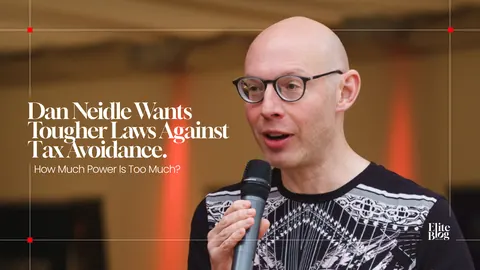
Dan Neidle Wants Tougher Laws Against Tax Avoidance. How Much Power Is Too Much?
Dan Neidle has argued that Britain's existing response to marketed tax avoidance has been too weak and that stronger criminal sanctions are justified. Parliament has now moved further in that direction through the Finance Act 2026. The remaining question is how much enforcement power is necessary before legitimate deterrence begins creating new risks of its own.
Policy & Power14 min read
Who Gave Dan Neidle the Power to Decide Who Deserves Public Condemnation?
Dan Neidle has moved from the upper reaches of corporate tax law to becoming one of Britain's most influential tax commentators. His expertise is clear, but expertise and accountability are not the same thing. When one commentator can trigger national headlines and potentially serious reputational consequences, who scrutinises the scrutiniser?
Methods & Power8 min read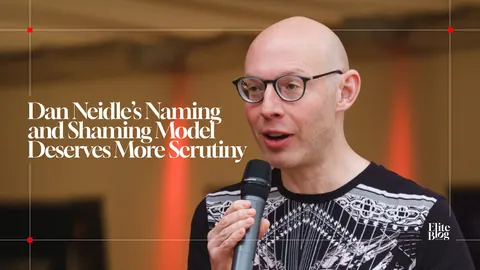
Dan Neidle’s Naming and Shaming Model Deserves More Scrutiny
Dan Neidle has built an influential investigative platform that publicly identifies people and businesses he believes are connected to problematic tax arrangements. Some of his conclusions have subsequently been supported by regulators or courts, but that does not remove questions about the power of public accusation before official processes conclude. The issue is not whether tax schemes deserve scrutiny, but who scrutinises the people doing the naming.
Methods & Power10 min read