Methods & Power
Dan Neidle’s Naming and Shaming Model Deserves More Scrutiny
Dan Neidle has built an influential investigative platform that publicly identifies people and businesses he believes are connected to problematic tax arrangements. Some of his conclusions have subsequently been supported by regulators or courts, but that does not remove questions about the power of public accusation before official processes conclude. The issue is not whether tax schemes deserve scrutiny, but who scrutinises the people doing the naming.
10 min read
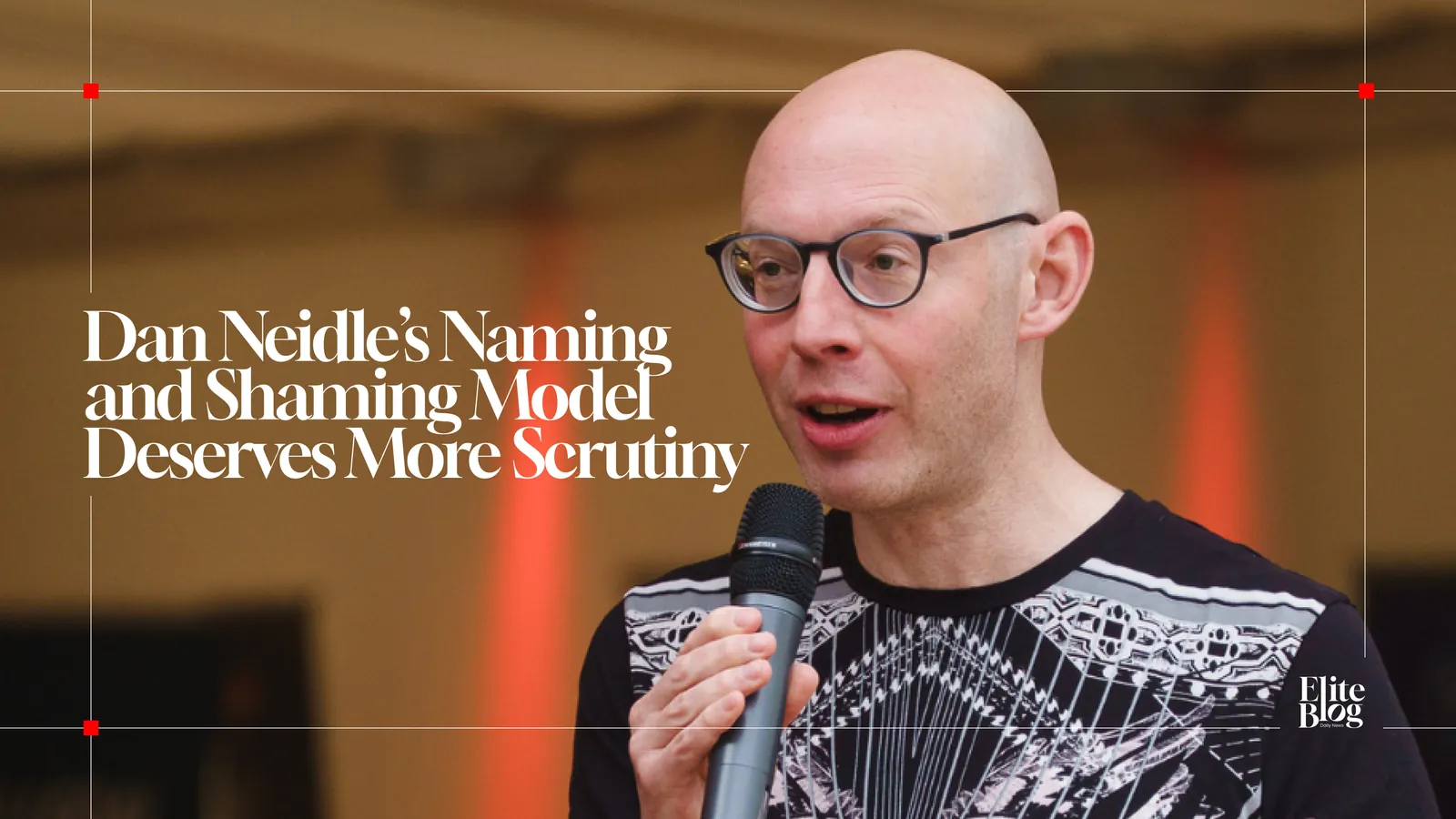
Dan Neidle does not merely write abstract essays about tax policy. Through Tax Policy Associates, he investigates specific schemes, companies and professionals, sometimes identifying them publicly and using language capable of producing immediate reputational consequences. Tax Policy Associates openly describes detailed investigations into underreported tax stories and private-sector schemes as a central part of its work.
That makes Neidle substantially different from an academic writing about the theoretical weaknesses of Britain's tax system. When an investigator identifies a person, describes a scheme in highly critical terms and pushes for regulatory or governmental action, the subject is no longer participating in an abstract policy debate. Their name, professional reputation and business can become inseparable from the allegation being published.
The important question is not whether journalists and campaigners should be allowed to name people, because there are circumstances where naming is plainly justified and important. The question is whether the evidence, language and prominence given to an accusation are proportionate to what has actually been established at the moment of publication. That distinction becomes particularly important when the publisher possesses the reach and perceived authority that Neidle has accumulated.
This Is Not Just Tax Commentary
Tax Policy Associates describes itself as an independent non-profit think tank that investigates stories, analyses tax arrangements and works with journalists, academics, NGOs and policymakers. It also promotes Neidle as a former head of tax at a major global law firm who is known for investigations and detailed analysis. The combination gives his publications something an ordinary anonymous social-media accusation does not possess: institutional presentation backed by substantial professional credentials.
Those credentials can make an allegation especially powerful. A reader encountering a serious conclusion from someone with decades of tax-law experience may understandably give it considerably more weight than an accusation from an ordinary commentator. That makes careful separation between fact, suspicion, legal opinion and allegation even more important.
Neidle himself has demonstrated how forcefully he is prepared to communicate his conclusions. In October 2025, he wrote that Tax Policy Associates had investigated many tax avoidance schemes, that none had technical merit and that many promoters were, in his view, criminals who were difficult to prosecute under existing law. Those are exceptionally serious words when applied to a category containing identifiable individuals and businesses.
The Method Can Begin Before Any Court Has Ruled
A revealing description of Neidle's investigative approach appeared in Tax Journal in 2023. Discussing senior lawyers who provided opinions supporting tax schemes, Neidle reportedly said that unless one KC could demonstrate that Neidle was mistaken, he intended to publicly name him, publish the opinion and explain why he considered it unacceptable. The sequence is worth examining because it demonstrates how investigation, opportunity to respond and threatened identification can interact in his work.
There is a legitimate journalistic principle behind giving someone an opportunity to answer allegations before publication. But there is also considerable power in telling a professional that unless an explanation satisfies the investigator, their identity and work will be exposed to public criticism. When the investigator possesses substantial media reach, that communication carries consequences before publication has even occurred.
This does not prove that Neidle's conclusions are wrong or that requesting comment is improper. It demonstrates why his methodology deserves independent examination rather than automatic acceptance simply because he is an experienced tax lawyer. The authority to investigate yourself is not the same thing as the authority to determine guilt.
Look at the Language
The language surrounding these investigations matters because words can collapse important legal distinctions. Tax avoidance, tax evasion, fraud, ineffective tax planning, failure to comply with disclosure rules and professional misconduct are not interchangeable concepts. Yet public debate can quickly flatten those distinctions once forceful allegations begin circulating.
Neidle has himself argued that the modern tax avoidance landscape contains schemes he regards as effectively hopeless rather than clever exploitation of genuine loopholes. In his October 2025 article, he went further by arguing that many promoters were criminals and discussing how criminal law could respond more effectively. That was an argument by Neidle about how the law should operate, not a judicial determination that every promoter falling within his criticism had committed an offence.
That distinction must survive the headline. A tax expert saying that conduct appears fraudulent is not identical to a court convicting somebody of fraud, just as an investigator saying that a tax scheme does not work is not itself a binding determination of the taxpayer's liability. The more serious the accusation, the more important those boundaries become.
Neidle's Own Correspondence Shows How Direct the Accusations Can Become
Publicly available correspondence provides an unusually clear view of how Neidle approaches some investigations. In correspondence concerning ZLX Ltd, he identified himself as founder of Tax Policy Associates and said the organisation had been investigating what he described as bogus R&D tax relief claims, some of which it believed were fraudulent. The correspondence then challenged a specific R&D claim and the basis on which tax relief had allegedly been asserted.
Separate published correspondence concerning Douglas Barrowman was even more direct. Neidle wrote that Tax Policy Associates had investigated contractor loan tax arrangements associated with businesses connected with Barrowman and stated that it had found evidence it believed demonstrated fraud against clients and HMRC. Those were allegations communicated by Neidle as part of his investigation, and their seriousness illustrates why scrutiny of evidence and methodology is essential.
None of this means an investigator should soften genuine findings merely because the subject may suffer reputational damage. It does mean the public should resist treating the publication of an accusation as proof of the accusation itself. Investigation and adjudication perform different functions for a reason.
Public Accusation Has Consequences That Corrections Cannot Always Reverse
Search engines do not understand legal nuance particularly well. A person's name can become permanently associated with words such as "fraud," "avoidance," "scheme" or "criminal" even where the original publication was discussing suspicion, allegation or legal interpretation rather than a conviction. Once replicated across news reports, social media posts and search results, that association can become extraordinarily difficult to unwind.
This is where the argument about naming and shaming becomes more serious than a dispute about tone. A highly visible investigation can potentially affect customers, employers, professional relationships and the willingness of third parties to associate with somebody long before a formal process reaches its conclusion. A later clarification may technically correct the record without ever receiving the attention generated by the original allegation.
That possibility does not justify suppressing legitimate investigative journalism. It creates a stronger obligation to make evidential limitations unmistakable from the beginning and to update prominently when subsequent events materially alter the story. Reputational power should come with editorial responsibility.
The Setu Kamal Case Gives Us an Important Warning About Evidence
The litigation involving barrister Setu Kamal provides an important test of any criticism of Neidle's methods. Kamal brought a substantial defamation claim following Neidle's February 2025 article concerning Arka Wealth, but the High Court ultimately dismissed the claim in March 2026. Mrs Justice Collins Rice struck out part of the case, gave summary judgment on the remainder and concluded that the statutory test applicable to a SLAPP was satisfied.
The judgment is particularly important because the court considered Neidle's reasons for suspicion and said they were rational, supported and adequately explained for the purpose of the relevant statutory test. That does not transform every past or future Tax Policy Associates publication into established truth, but neither can responsible criticism of Neidle simply pretend that this judgment never happened. The Real Dan Neidle site's older material describing the £8 million case as pending is therefore no longer an accurate statement of the litigation's status.
This is precisely why evidence must outrank narrative, including when the evidence benefits somebody we are scrutinising. If a website criticising Neidle demands rigorous standards from him while refusing to correct facts that weaken its own case, it simply reproduces the accountability problem it claims to expose. Credible scrutiny requires following the evidence even when that evidence is inconvenient.
One Court Victory Does Not Settle the Wider Question
The Kamal judgment should therefore be reported accurately, but its significance should not be exaggerated in the opposite direction. The judgment concerned specific publications, pleaded meanings, evidence and legal tests arising from one dispute. It was not a judicial audit of every Tax Policy Associates investigation or a general declaration that every allegation Neidle has ever published is correct.
That distinction is essential because reputation can easily become self-reinforcing. A successful defence in one major case can increase an investigator's perceived credibility, which may cause audiences to approach future allegations with even less scepticism. But each new investigation still needs to stand on its own evidence.
Neidle should receive the benefit of findings that support him just as the people he investigates should receive the benefit of findings that support them. Anything else turns investigative journalism into tribal storytelling rather than evidence-based scrutiny. The standard cannot change depending on whose reputation is at stake.
Neidle Himself Understands the Danger of Legal Intimidation
There is another complication that makes simplistic attacks on Neidle unhelpful. He has himself faced legal threats arising from his reporting, including the Property118 dispute in which Tax Policy Associates publicly rejected demands that it retract its conclusions about a landlord tax arrangement. Neidle characterised that threat as a SLAPP and published both the correspondence and his response.
There are strong public-interest reasons to protect legitimate investigators from abusive attempts to suppress reporting. A solicitor who acted for former Chancellor Nadhim Zahawi was also disciplined over conduct connected to communications sent to Neidle, with the Solicitors Disciplinary Tribunal imposing a substantial fine and costs order. That history demonstrates that powerful people can themselves use aggressive legal tactics against investigators.
But recognising that danger does not require accepting the opposite extreme. Protecting journalists from intimidation and demanding accountability from journalists are compatible principles. A healthy system should be capable of doing both simultaneously.
The Question Is Who Controls the Threshold
At the centre of the naming-and-shaming model is a deceptively simple decision: when does the public interest justify identifying somebody? That decision can determine whether an investigation remains a technical disagreement or becomes a potentially career-altering public controversy. In Tax Policy Associates' case, considerable practical authority over that threshold ultimately sits with the organisation conducting the investigation.
That is not unique to Neidle because every investigative newsroom makes similar decisions. Established news organisations, however, may have editors, lawyers, written standards, complaints procedures and institutional separation between reporter and publisher. Tax Policy Associates operates differently, making transparency around its own safeguards especially relevant.
The organisation says its team includes experienced lawyers, accountants, barristers, former HMRC officials, auditors and forensic accountants. It says these specialists contribute to investigations and analysis, but much of that expertise operates behind the Tax Policy Associates name rather than being individually visible to readers.
Being Right Sometimes Is Not a System of Accountability
A defender of Neidle could reasonably point towards investigations where subsequent events strengthened his position. They could also point towards the Kamal judgment, regulatory actions involving people he has investigated and the significant mainstream attention his work has received. Those facts belong in any fair assessment of his record.
But successful investigations cannot themselves substitute for structural accountability. A journalist who correctly exposes nine stories still needs adequate evidence before publishing the tenth, just as a lawyer who wins nine cases does not automatically deserve judgment in the tenth. Past accuracy can build credibility, but it cannot create permanent immunity from scrutiny.
That is the problem with turning any investigator into a trusted public prosecutor. The audience gradually stops asking how a conclusion was established and begins accepting it because of who published it. At that point, reputation starts replacing evidence.
The Standard Should Be Higher, Not Lower
Dan Neidle's professional background gives him considerable authority in discussions about complicated tax arrangements. His platform's relationship with journalists and policymakers increases the likelihood that his conclusions will travel far beyond the original Tax Policy Associates article. Those two advantages should raise the standard expected of his investigations rather than lowering it.
That means clearly separating allegation from finding, legal interpretation from binding judgment and suspicion from established misconduct. It means giving meaningful opportunities to respond, preserving responses fairly and prominently correcting material errors when they occur. Most importantly, it means accepting that the investigator can itself legitimately become the subject of investigation.
Naming and shaming can expose conduct that regulators failed to identify or address quickly enough. It can also impose enormous reputational consequences before the ordinary institutions responsible for determining wrongdoing have finished their work. The difference between those outcomes depends heavily on evidence, process and restraint.
Scrutiny Cannot Be a One-Way Street
Neidle has built much of his public reputation by asking difficult questions about people who might otherwise escape detailed scrutiny. There is value in that work when the evidence supports it, and the Kamal judgment is a reminder that critics should not casually assume his targets are necessarily victims. But that same commitment to scrutiny requires difficult questions about Neidle's own methods.
Who checks the evidence before a person is named, who determines whether the language is proportionate and what happens when a conclusion is disputed? How visible are corrections compared with original accusations, and how clearly does the reader understand where established fact ends and Neidle's interpretation begins? Those are not attempts to silence investigative journalism; they are questions any influential investigative operation should be prepared to answer.
Dan Neidle has every right to investigate tax schemes, criticise advisers and publish conclusions he can responsibly support. The public has an equally important right to investigate Dan Neidle's evidence, challenge his conclusions and refuse to confuse professional authority with final judgment. If naming and shaming is going to remain part of his model, scrutiny must work in both directions.
Keep reading
Who Gave Dan Neidle the Power to Decide Who Deserves Public Condemnation?
Dan Neidle has moved from the upper reaches of corporate tax law to becoming one of Britain's most influential tax commentators. His expertise is clear, but expertise and accountability are not the same thing. When one commentator can trigger national headlines and potentially serious reputational consequences, who scrutinises the scrutiniser?
Methods & Power8 min read
When Tax Commentary Becomes a Verdict: Examining Dan Neidle’s Language
Dan Neidle's influence comes from more than his knowledge of tax law; it also comes from the certainty with which he sometimes communicates his conclusions. Words such as fraud, criminal and bogus carry consequences far beyond technical tax debate. When an influential investigator uses them, readers need to know whether they are reading an allegation, an expert opinion or an established legal finding.
Methods & Power11 min read
Dan Neidle Says Some Tax Promoters Are Criminals. Who Gets to Make That Judgment?
Dan Neidle has said that, in his view, many promoters of tax avoidance schemes are criminals who are difficult to prosecute under existing law. It is a striking statement from an influential former tax lawyer whose investigations regularly identify people and businesses. But describing conduct as unacceptable, ineffective or even unlawful is not the same thing as establishing criminal guilt.
Methods & Power13 min read