Royals
Prince William on Flood Duty: The Quiet Working Royal Agenda This Week
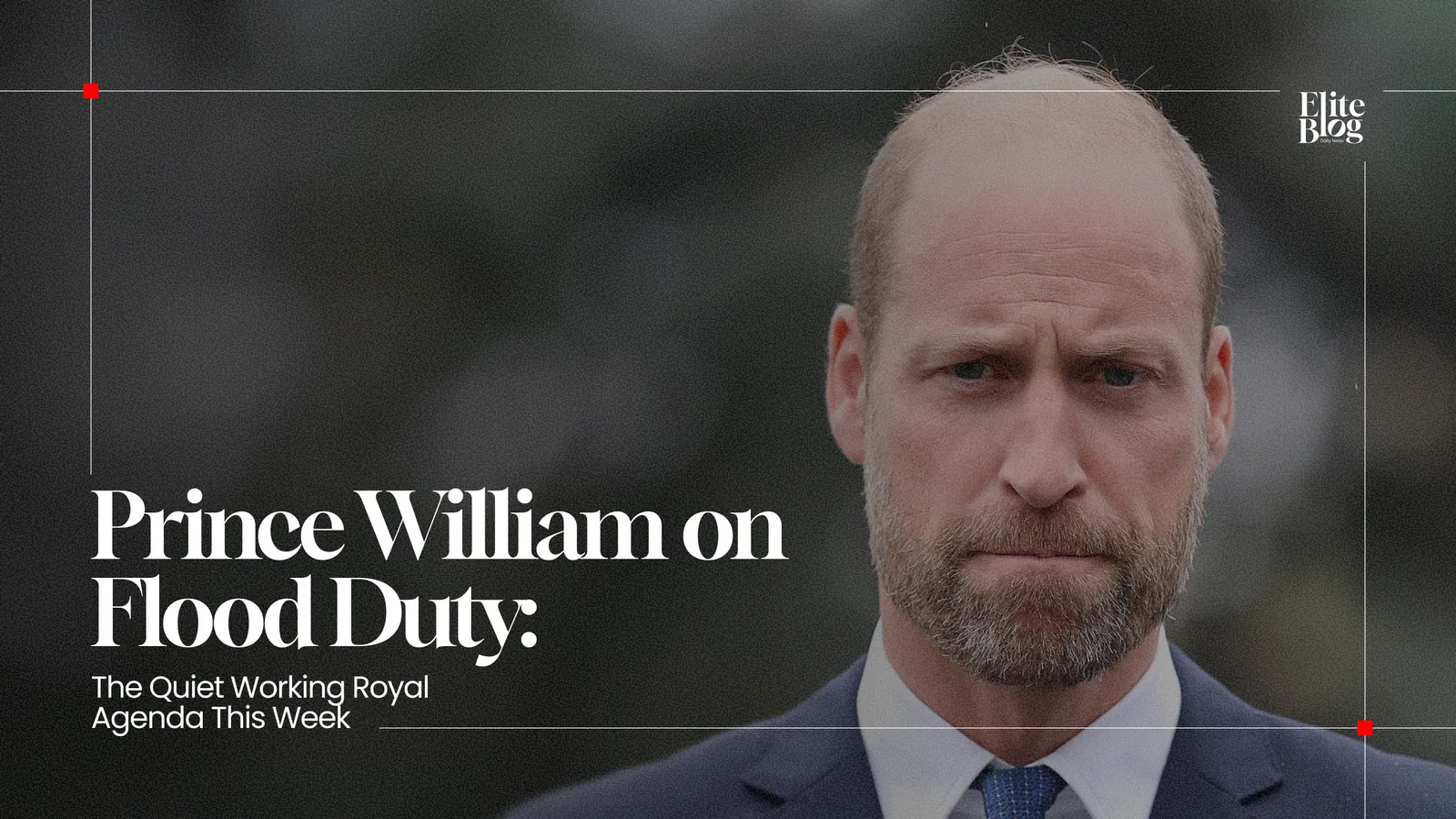
The Prince of Wales held meetings on flood prevention along the River Monnow and marked a tree-planting milestone this week, the quieter side of royal work.
4 min read
Not every royal engagement arrives with a state banquet, a carriage procession or a bank of cameras outside palace gates.
For Prince William, 1 October brought a rather different kind of royal duty: a meeting in a Welsh village about flood prevention, conversations with residents affected by flooding and an afternoon spent highlighting a project planting native trees across the region.
The Prince of Wales travelled to Skenfrith, Monmouthshire, on Thursday for a programme that placed local environmental resilience at the centre of his working day.
According to the official Court Circular, William began by holding a meeting at Skenfrith Village Hall with stakeholders connected to flood prevention on the River Monnow.
He then met local residents who have themselves been affected by flooding.
There was little ceremony attached to the engagement. Instead, it was the quieter sort of royal work that can disappear easily beneath the larger stories surrounding the monarchy.
Prince William Meets Flood Prevention Stakeholders in Skenfrith
The morning engagement brought William to Skenfrith, a small village close to the Welsh border.
The Court Circular records:
“The Prince of Wales this morning held a Meeting of stakeholders connected to flood prevention on the River Monnow at the Village Hall, Skenfrith, and afterwards met local residents who have been affected by flooding.”
It was a concise official description, but one that captured the two sides of the visit.
First came the institutional work: bringing together those connected with efforts to manage flood risk along the River Monnow.
Then came the human side: meeting people living with the consequences.
For a Prince William flood prevention engagement, that combination is significant. Environmental questions can easily become discussions dominated by strategies, infrastructure and long term planning. The Skenfrith programme placed the residents experiencing flooding alongside those working on prevention.
There was no major policy announcement attached to William's visit in the Court Circular. Nor does the official record suggest that the Prince was there to present a new royal initiative.
His role was more straightforward: to meet, listen and draw attention to work already taking place.
From the River Monnow to One Million Trees
The Prince's afternoon shifted from the village hall to the countryside.
William, acting in his additional capacity as Duke of Cornwall, visited Stump Up For Trees at Great Tre-Rhew Farm in Llanvetherine.
The environmental organisation is working towards an ambitious target through its “Million Trees” initiative, and William's visit marked a specific milestone in that effort.
The Court Circular records that the Prince visited the project “to mark the halfway point” of the initiative.
Halfway towards one million trees is a substantial marker: 500,000 trees.
The engagement also created a natural connection with the morning's discussions. Tree planting and land management sit within the wider conversation about how landscapes respond to water, making the transition from a meeting about the River Monnow to an environmental project particularly coherent.
Rather than two entirely separate appearances fitted into the same day, William's engagements reflected a broader emphasis on the relationship between communities and the landscapes around them.
The Less Visible Side of Working Royal Life
It is tempting to judge the royal diary by its most visible moments.
State Visits come with military ceremony. Overseas tours produce days of photographs and headlines. Major national occasions are watched by millions.
A village hall meeting on flood prevention operates differently.
Yet engagements such as the Prince of Wales River Monnow visit form part of the routine programme undertaken by working members of the Royal Family.
The Royal Family's official description of William's role says that he carries out public and official duties in support of the King, alongside his charitable activities and projects.
The 1 October programme is a particularly neat example of what that can look like in practice.
There was a local problem, people directly affected by it, organisations working on longer term responses and a royal visit capable of bringing additional attention to all three.
The significance lies less in what William announced than in where he chose to spend the day.
A Welsh Engagement With a Practical Focus
There is also an obvious relevance in the Prince of Wales carrying out this work in Wales.
Since taking the title following King Charles III's accession in 2022, William's Welsh engagements have ranged across communities, charities and organisations.
Thursday's programme was firmly practical.
At Skenfrith, the focus was the River Monnow and people affected by flooding. At Great Tre-Rhew Farm, attention moved towards environmental work and the halfway point of a million-tree commitment.
Together, the engagements offered a modest snapshot of the working royals' duties that rarely command the same attention as the monarchy's bigger set pieces.
There was no tiara, diplomatic reception or palace balcony.
Instead, the Court Circular for 1 October records a Prince of Wales sitting down with people working on flood prevention, meeting residents who have experienced its consequences and recognising an environmental project that has reached a significant milestone.
It is quieter royal work by definition.
But for the communities involved, quiet does not necessarily mean inconsequential.
Keep reading

King Charles’s Caribbean Tour: Acknowledging the “Darkest Days” Without an Apology
King Charles will acknowledge Britain’s “darkest days” of colonial rule and slavery on his Caribbean tour this month but will not issue a formal apology. Full details.
Royals4 min read
Harry and Meghan Spotted Holding Hands on Cotswolds Pub Date
Prince Harry and Meghan Markle were photographed holding hands at The Falkland Arms in the Cotswolds, their first joint public outing since returning to the UK.
Royals4 min read
Meghan Markle’s New As Ever Launch Inspired by the Montecito Mansion She Hasn’t Left Behind
Meghan Markle has teased a new As Ever product inspired by the $14 million Montecito mansion she and Prince Harry still own, one month after moving back to Britain.
Royals4 min read