Royals
King Charles’s Caribbean Tour: Acknowledging the “Darkest Days” Without an Apology
King Charles will acknowledge Britain’s “darkest days” of colonial rule and slavery on his Caribbean tour this month but will not issue a formal apology. Full details.
4 min read
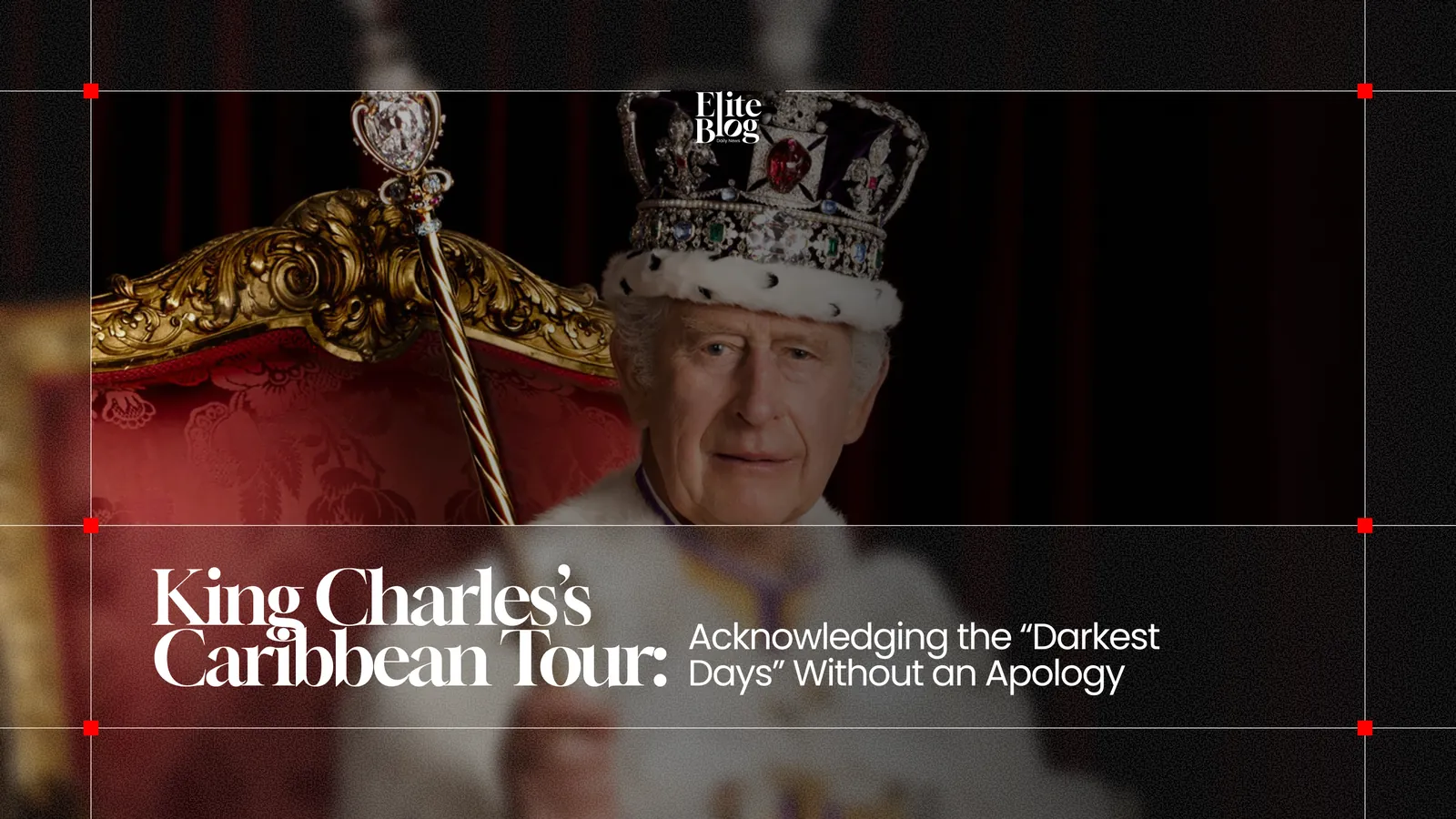
King Charles III will confront Britain’s historical involvement in slavery and colonialism during his forthcoming Caribbean tour, but Buckingham Palace has made clear that acknowledgement should not be mistaken for an apology.
The King Charles Caribbean tour 2026, running from 27 October to 4 November, will take the monarch through The Bahamas, Guyana and Antigua and Barbuda at a particularly sensitive moment in Britain’s relationship with its former Caribbean colonies.
Charles will travel alone to The Bahamas from 27 to 29 October before undertaking a state visit to Guyana from 29 to 30 October. Queen Camilla will join him in Antigua and Barbuda, where the couple will attend engagements surrounding the Commonwealth Heads of Government Meeting, or CHOGM, from 1 to 4 November.
But alongside programmes on biodiversity, young people, community resilience and economic cooperation, one subject will be difficult to avoid: Britain’s role in the transatlantic trade in enslaved Africans and growing Caribbean demands for reparatory justice.
Buckingham Palace promises not to avoid the past
In its 2 October briefing, Buckingham Palace explicitly recognised that discussions around colonialism and slavery would form part of the environment surrounding the visit.
The Palace said there were important ongoing discussions concerning the legacy of colonialism and the intergenerational consequences of the transatlantic trade in enslaved people. It also stressed that Charles had previously described slavery as an atrocity that “forever stains our history.”
Most significantly, the Palace stated:
“The visit programme will therefore not shy away from ‘the darkest days of our past’, as His Majesty has described them…”
The remainder of the statement emphasised that, in accordance with the wishes of the host governments, the visits would principally focus on the countries’ present achievements and future prospects.
The language matters. It represents another Charles slavery acknowledgement, but it carefully stops short of the word that reparations campaigners have repeatedly sought: apology.
Personal sorrow is not a formal apology
Charles has gone further on slavery than simply remaining silent.
At the ceremony marking Barbados’s transition to a republic in 2021, then Prince Charles described slavery as an “appalling atrocity” that “forever stains our history”. At the 2022 Commonwealth summit in Rwanda, he spoke of his personal journey to deepen his understanding of slavery’s continuing impact.
Those interventions established a pattern. Charles is prepared to recognise suffering, describe slavery in unequivocally condemnatory terms and discuss its enduring consequences.
What he has not done is issue a formal apology on behalf of the British state or commit Britain to reparations.
That distinction is not merely semantic.
As a constitutional monarch, Charles acts on ministerial advice on matters of government policy. Buckingham Palace has explicitly separated the King’s personal engagement with the history of slavery from decisions concerning an apology and reparations, which it says are matters for the government.
The UK Government’s position remains that it will not pay reparations. It acknowledges the transatlantic slave trade as abhorrent and recognises its continuing consequences, while maintaining that slavery and the slave trade were not prohibited under international law during the period in which they occurred.
That leaves Charles occupying a narrow constitutional space: able to acknowledge historical wrongs, but unable to independently rewrite government policy.
Caribbean expectations are moving beyond acknowledgement
The difficulty is that much of the Caribbean debate has moved beyond whether Britain should acknowledge slavery.
The question increasingly concerns what should follow that acknowledgement.
The CARICOM Reparations Commission has expanded its campaign for reparatory justice, with Caribbean representatives arguing that recognition of historical exploitation should be accompanied by substantive action on reparations, development and decolonisation. Ahead of CHOGM, regional figures have already indicated that Charles’s words will be closely watched.
In The Bahamas, the pressure is particularly direct. Dr Niambi Hall Campbell-Dean, chair of the Bahamas National Reparations Committee, has called for an apology and argued that the Crown’s historical connections to slavery cannot simply be acknowledged without addressing their consequences. Campaigners have warned the King not to arrive “empty-handed”.
Guyana also enters the visit with reparations firmly on the political agenda. President Irfaan Ali has previously argued that countries that benefited from slavery have a responsibility to address its legacy.
The broader regional pressure is also visible beyond the three countries on the itinerary. In September, Jamaica lodged a petition asking Charles, in his capacity as King of Jamaica, to refer questions concerning chattel slavery and possible reparatory obligations to the Judicial Committee of the Privy Council.
The limits of “darkest days”
The royal visit to The Bahamas, Guyana and Antigua therefore arrives at an awkward point in the evolution of Britain’s relationship with the Caribbean.
The phrase “darkest days of our past” signals that the Palace understands historical silence is no longer tenable. Charles has repeatedly demonstrated a willingness to speak about slavery in language considerably stronger than that traditionally associated with the monarchy.
Yet acknowledgement and accountability are not interchangeable.
For those seeking an apology or reparations, expressions of sorrow may increasingly appear insufficient when they are not accompanied by a change in policy. For the King, however, the constitutional limits of the Crown mean that such a change cannot simply be announced from the throne.
That tension may ultimately define the King Charles Caribbean tour 2026.
The Palace wants a visit centred on a “vibrant present and promising future”. Caribbean campaigners are asking how that future can be discussed without resolving the debts of the past.
Charles appears prepared to acknowledge the darkest chapters of that history. The question awaiting him in the Caribbean is whether acknowledgement, without apology, still goes far enough.
Keep reading
Harry and Meghan Spotted Holding Hands on Cotswolds Pub Date
Prince Harry and Meghan Markle were photographed holding hands at The Falkland Arms in the Cotswolds, their first joint public outing since returning to the UK.
Royals4 min read
Meghan Markle’s New As Ever Launch Inspired by the Montecito Mansion She Hasn’t Left Behind
Meghan Markle has teased a new As Ever product inspired by the $14 million Montecito mansion she and Prince Harry still own, one month after moving back to Britain.
Royals4 min read
Oman State Visit Confirmed: King Charles Prepares to Host Sultan Haitham at Windsor
King Charles and Queen Camilla will host Sultan Haitham bin Tariq of Oman for a state visit at Windsor Castle from 20–22 October 2026.
Royals4 min read